
Product positioning and content system rebuild
Fixing a disjointed content workflow, devising the product proposition and aligning content, brand and UX.
Rebuilding Bybit Card's content system from the workflow up — fixing the missing context that was producing disconnected copy, then rebuilding the product positioning itself.
Metrics and outcomes
The challenge
Bybit Card's content problem went deeper than weak copy. The business need was a page that actually converted. What existed was transactional, context-free brand messaging, cut off from what the product did or who it served, because the message and the product proposition had never been joined up in the first place.
The root cause sat upstream of the copy itself. Product and design were giving out briefs without marketing context, documentation, Figma access or visibility into roadmap or strategy. The result was a team being asked to write the right words for a product they weren't allowed to understand.
The problem to solve: fix the workflow that produced the copy, not just the copy itself.
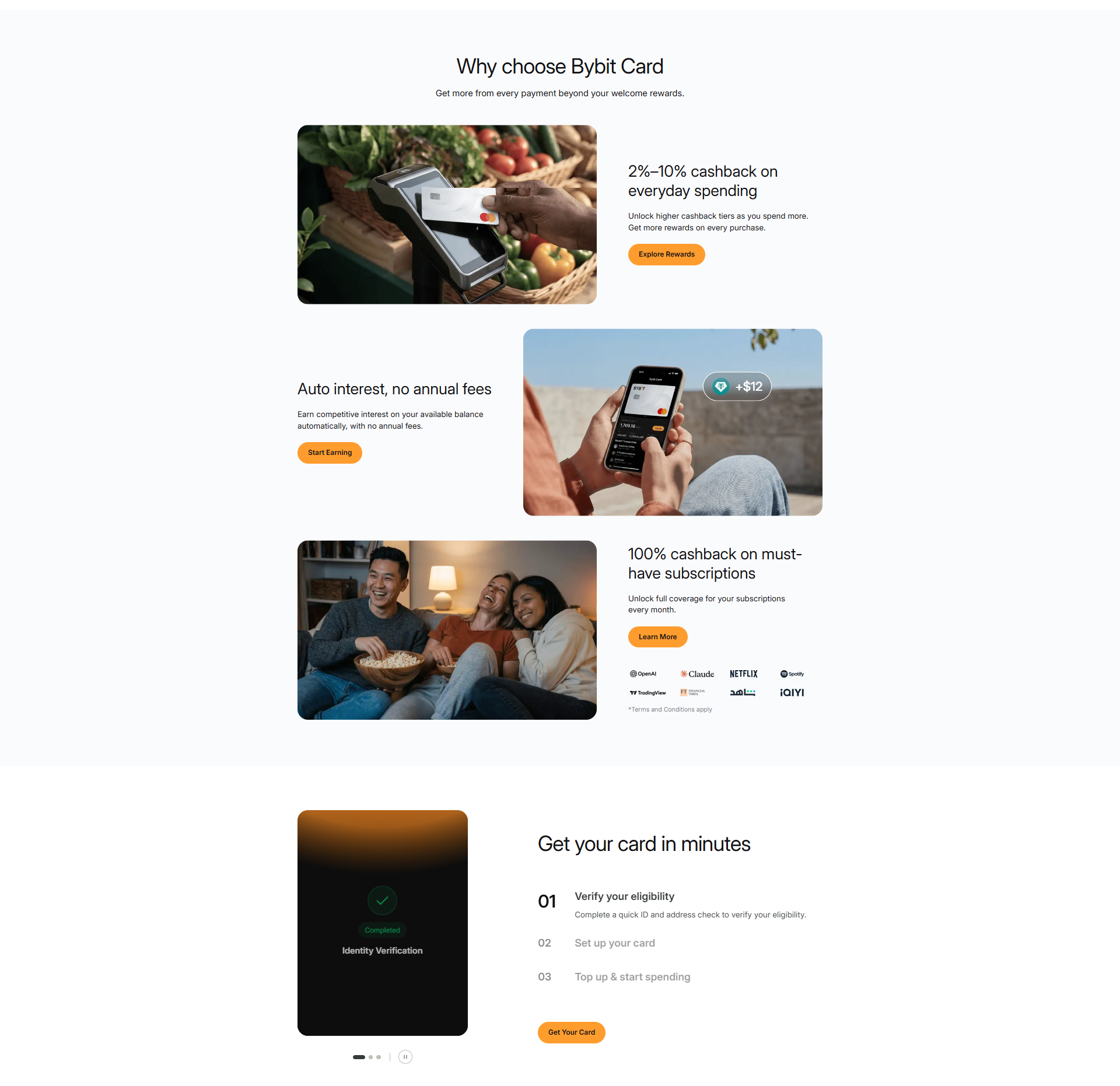
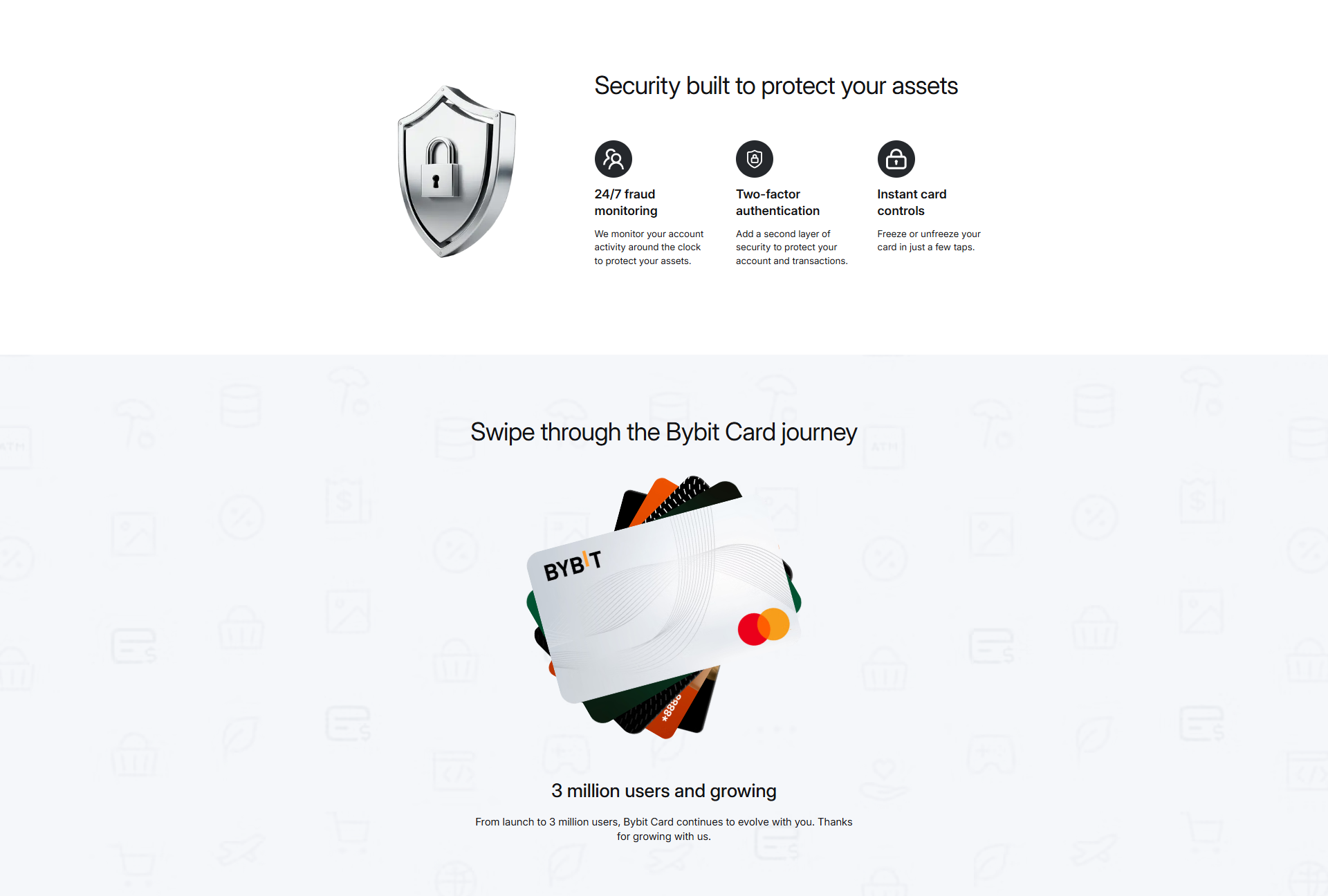
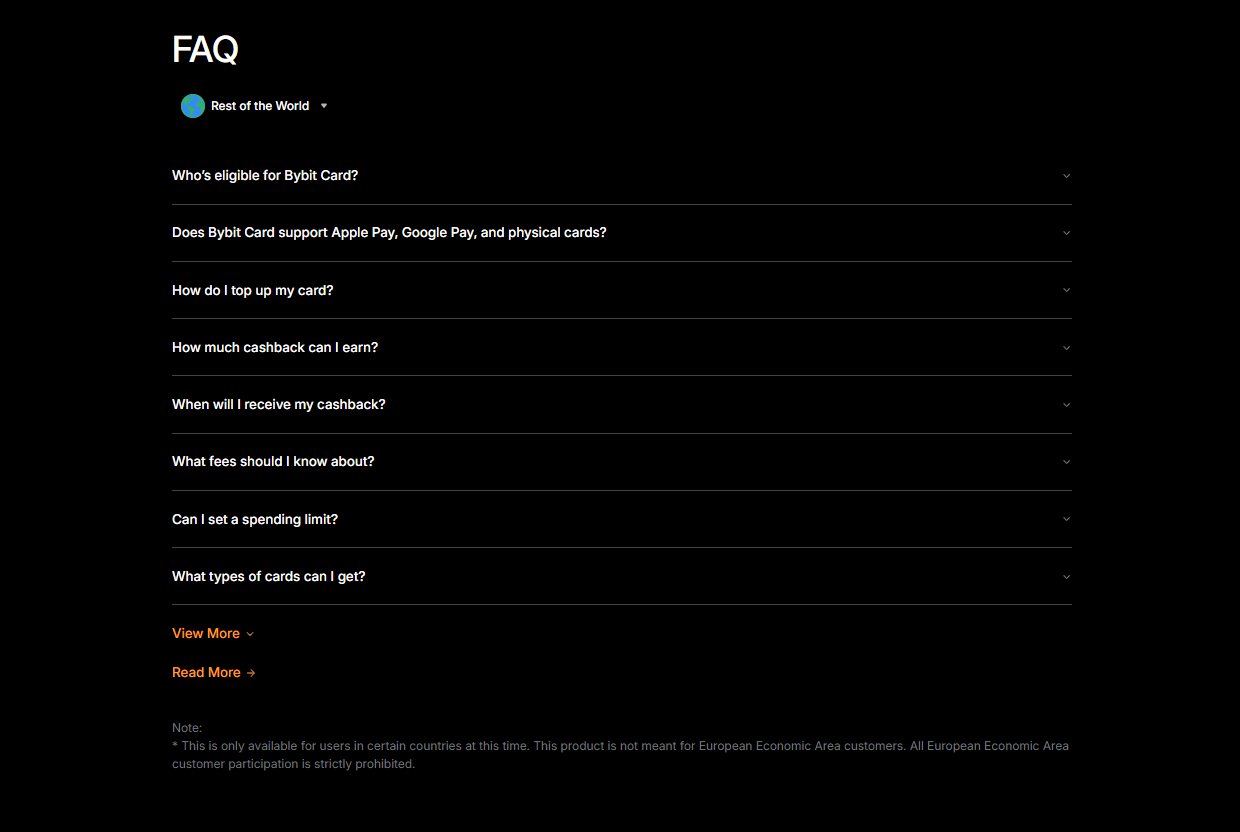
Gathering insights
Leading brainstorming sessions
The content team was well placed to run these sessions. I sat down with product and project leads to identify the key issues and user personas, and to work out how the product’s unique selling points could stand out more.
Competitor research
I looked into other card competitors like Revolut, Visa, Gemini and HSBC to see how they advertised their cards. Every one of them pointed towards lifestyle upgrade and mobility.
Feedback from revamped content SOP
After the A/B testing success, the copy team upgraded its standard operating procedure (SOP) to win visibility into product roadmaps and design documentation. That changed what the creative process had to work with.

Ideation
Established a new working system
Content designers finally had the product context they needed before writing anything: product and market requirement documents (PRDs and MRDs) for intent and requirements, Figma files for layout and flow, and direct channels with product owners for roadmap alignment. This was a structural shift in how content design sat inside the product team, from executing briefs to owning the brand narrative and how it reached people.
Refreshed the brand image
Analysis of Visa, Revolut, Gemini and HSBC showed a consistent pattern: the strongest propositions led with the lifestyle or financial identity the card gave you access to. That shaped Bybit Card’s proposition: the card that opens up digital finance, global mobility and a future-oriented lifestyle.
Integrated marketing implementation
This new position and working system were used across channels, from announcement centres, in-app copy and socials to brand taglines and the landing page. The experience and storytelling were now consistent and polished, keeping the copy's progression matched to the intended user journey from awareness to action.
Results
- 86% stakeholder satisfaction
- Helped the Card team hit its quarterly objectives and key results (OKRs)
Want this run on your content?
The first audit is complimentary. Two days from kickoff to write-up.
Related reading

How to become a more proactive content designer (even when you're moving fast) (Ditto)
On winning the product context this rebuild depended on
Content design skills to be more proactive (UX Content Collective)
The same fight for context, fought from inside a different team
Bybit A/B Testing
The earlier programme that earned the credibility to change this workflow